
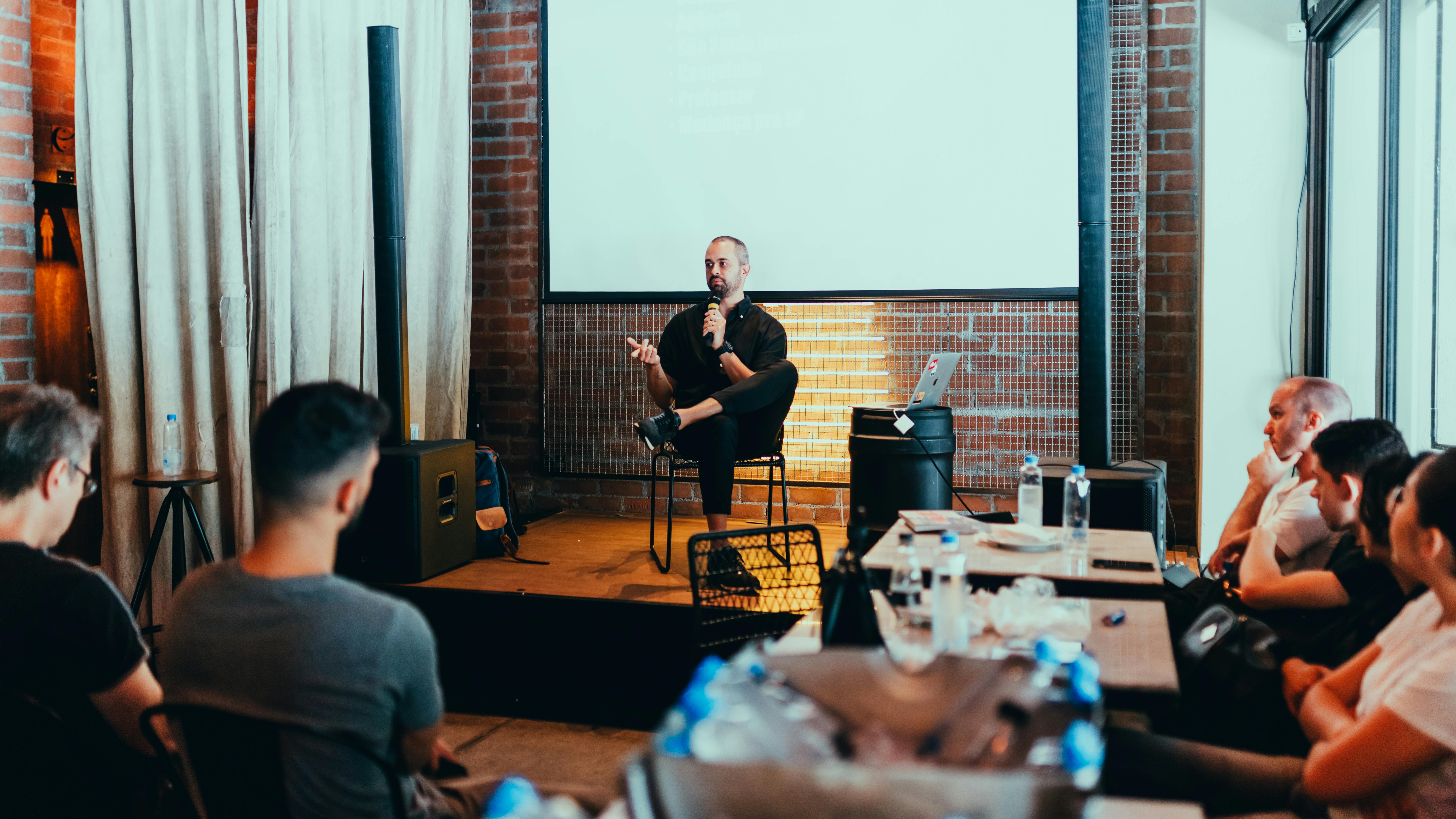
Thought leadership has never been more valuable than it is today. In a landscape shaped by accelerated innovation, AI-driven workflows, and rapidly shifting customer expectations, audiences gravitate toward individuals who can make sense of the noise. They want clarity, conviction, and ideas that move industries forward. But becoming a thought leader isn’t about self-promotion—it’s about cultivating trust, demonstrating expertise, and creating genuine impact.
Whether you’re an entrepreneur, an executive, or a subject-matter specialist, the path to thought leadership is accessible to anyone willing to invest in consistency and depth. Here’s how to build a credible, influential presence in 2026.
1. Start with a Clear Point of View
The foundation of thought leadership is perspective. In 2026, generic opinions and recycled insights won’t cut through. Audiences expect leaders with a distinct, defensible point of view; something shaped by experience, pattern recognition, and a willingness to challenge assumptions.
To clarify your POV:
- Identify the specific problem you are uniquely qualified to solve.
- Articulate the shifts you see in your field before others see them.
- Make predictions and take positions, even if they’re not universally popular.
Thought leaders are not neutral observers; they are interpreters and navigators. Your point of view should act as your North Star across every platform—articles, talks, interviews, and social content.
2. Build Expertise That Goes Beyond Job Titles
In 2026, expertise is fluid. AI tools can accelerate learning, data is more widely available, and cross-disciplinary knowledge is increasingly valuable. True thought leadership grows from continual skill expansion, not simply tenure or credentials.
Strengthen your expertise by:
- Cultivating a hybrid skill stack—pair your domain knowledge with emerging tech, behavioral science, or strategic design.
- Using AI as a research partner to go deeper, faster.
- Participating in communities of practice where experimentation and peer learning happen.
Your audience needs to see two things at once: that you understand the current state of your industry and that you’re actively exploring what’s next.
3. Create a Signature Content Strategy
Thought leaders don’t just have ideas—they communicate them effectively and consistently. In 2026, content is still king, but curation and clarity are just as important as creation. The goal is to build a body of work that becomes unmistakably yours.
A strong content strategy includes:
A Core Theme
Select 1–3 themes that represent your expertise and point of view. Avoid trying to be everything to everyone. The tighter your focus, the faster your authority grows.
A Format You Can Sustain
Whether you excel at writing, speaking, short-form video, long-form analysis, or interviews, choose formats you can commit to. Audiences reward consistency more than perfection.
A Mix of Depth and Velocity
Long-form content (blogs, whitepapers, podcasts) anchors your credibility. Short-form content (LinkedIn posts, X threads, reels) amplifies it. Both matter.
AI-Accelerated Production
Use AI tools to streamline research, outline faster, repurpose content, and maintain a consistent publishing cadence without sacrificing quality. The leaders of 2026 are not the ones who produce the most content, but those who produce the most insightful content with the least friction.
4. Engage in Conversations, Not Just Broadcasting
Thought leadership is a dialogue. Audiences follow people who engage, respond, and listen. Building influence in 2026 means showing up as an active participant, not just a commentator.
Ways to build real engagement:
- Respond thoughtfully to industry news and breakthroughs.
- Comment on posts from peers and rising voices, not only high-profile accounts.
- Ask your audience questions that spark discussion.
- Collaborate with other creators to cross-pollinate your networks.
The most successful thought leaders are not isolated experts; they are connectors who bring people together around ideas that matter.
5. Leverage Data, Insights, and Signals as a Thought Leader
2026 demands evidence-driven leadership. Opinions alone won’t differentiate you; informed insights will. Use data—whether proprietary, publicly available, or AI-generated—to strengthen your arguments and predictions.
Consider integrating:
- Trend analyses
- User or customer research
- Benchmarks and performance data
- Case studies or experiments
Thought leaders who ground their viewpoints in data earn trust faster and stand out in a crowded marketplace of hot takes.
6. Build a Reputation for Integrity and Transparency
In an era of deepfakes, AI-generated misinformation, and noisy digital channels, credibility is currency. Audiences want transparency about your process, your principles, and how you form your ideas.
To maintain trust:
- Disclose when you use AI-generated content or tools.
- Explain how you reach conclusions or predictions.
- Be open about what you don’t know yet.
- Admit and update your perspective when new evidence emerges.
Thought leaders who demonstrate humility alongside expertise will outperform those who rely solely on their personal brand.
7. Develop a Speaking and Visibility Strategy
Visibility amplifies authority. In 2026, thought leaders aren’t confined to conferences—they reach audiences through hybrid events, virtual roundtables, webinars, live audio sessions, and guest appearances on digital platforms.
Build your visibility by:
- Pitching yourself to podcasts and event organizers.
- Hosting your own monthly webinars or AMAs.
- Joining online communities where your target audience actively participates.
- Creating signature talks that evolve each quarter with fresh insights.
The more you show up with value, the more momentum your reputation gains.
8. Create Real-World Impact
The most enduring thought leaders are practitioners, not just commentators. They test ideas, build prototypes, lead projects, and apply insights in real scenarios. Audiences in 2026 expect thought leaders to demonstrate impact, not just write about it.
Highlight your real-world influence through:
- Case studies
- Behind-the-scenes stories
- Lessons learned from failed experiments
- Collaborations with partners or clients
- Pilot projects that push boundaries
Thought leadership is earned through contribution, not claims.
9. Foster a Community Around Your Ideas
Sustained influence comes from community. When people gather because of your perspective and energy, your thought leadership becomes scalable and self-reinforcing.
To build community:
- Create newsletters, groups, or live series dedicated to your core themes.
- Offer exclusive content or insights to your most engaged followers.
- Encourage dialogue and showcase members’ contributions.
- Turn your audience into co-creators when possible.
Communities transform followers into advocates—and advocates into amplifiers.
10. Commit to a Long-Term Practice
Thought leadership is a marathon, not a sprint. The leaders who emerge in 2026 will be those who commit to curiosity, experimentation, and ongoing growth.
Long-term success requires:
- A publishing cadence you can sustain for years.
- Regular assessments of what topics and formats resonate most.
- Continual refinement of your voice, style, and intellectual scaffolding.
- Patience. Thought leadership is built through accumulation, not spikes of activity.
The New Definition of Thought Leader
Becoming a thought leader is less about going viral and more about creating value at scale. It’s about showing up consistently, offering original thinking, and earning trust through transparency and impact.
Audiences gravitate toward those who help them make sense of an increasingly ambiguous world—and with the right mindset and strategy, that can be you.